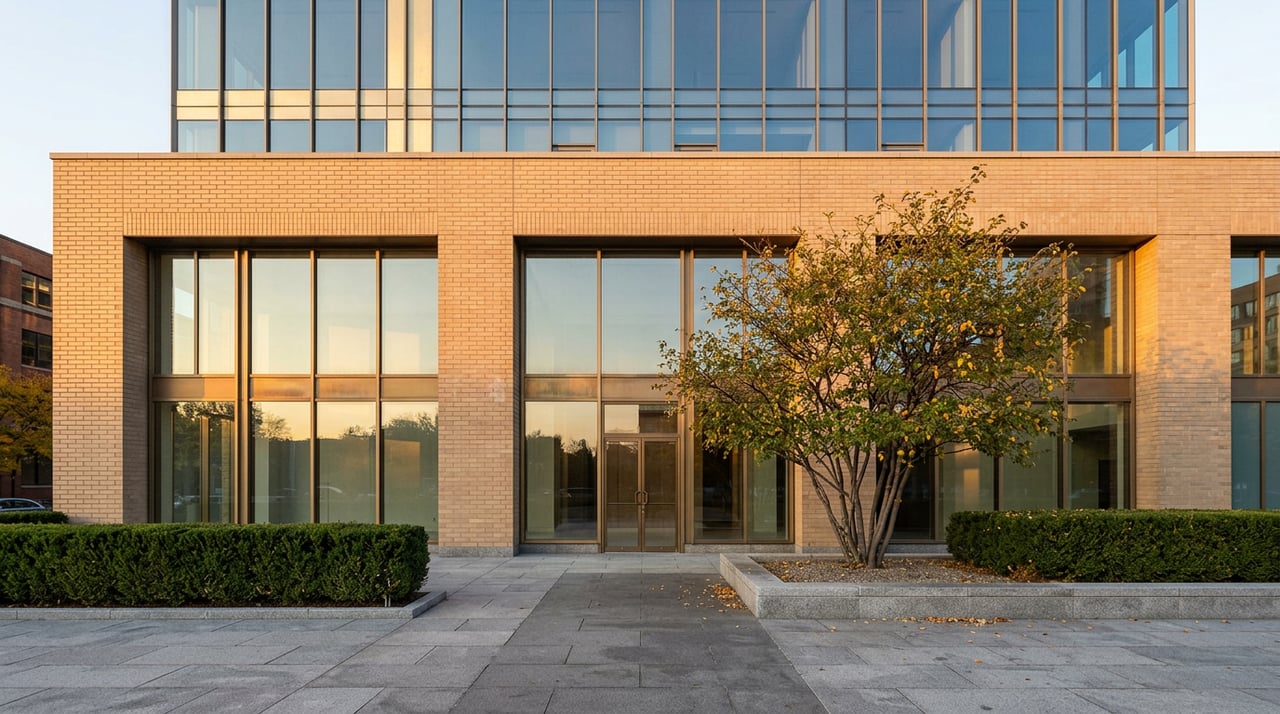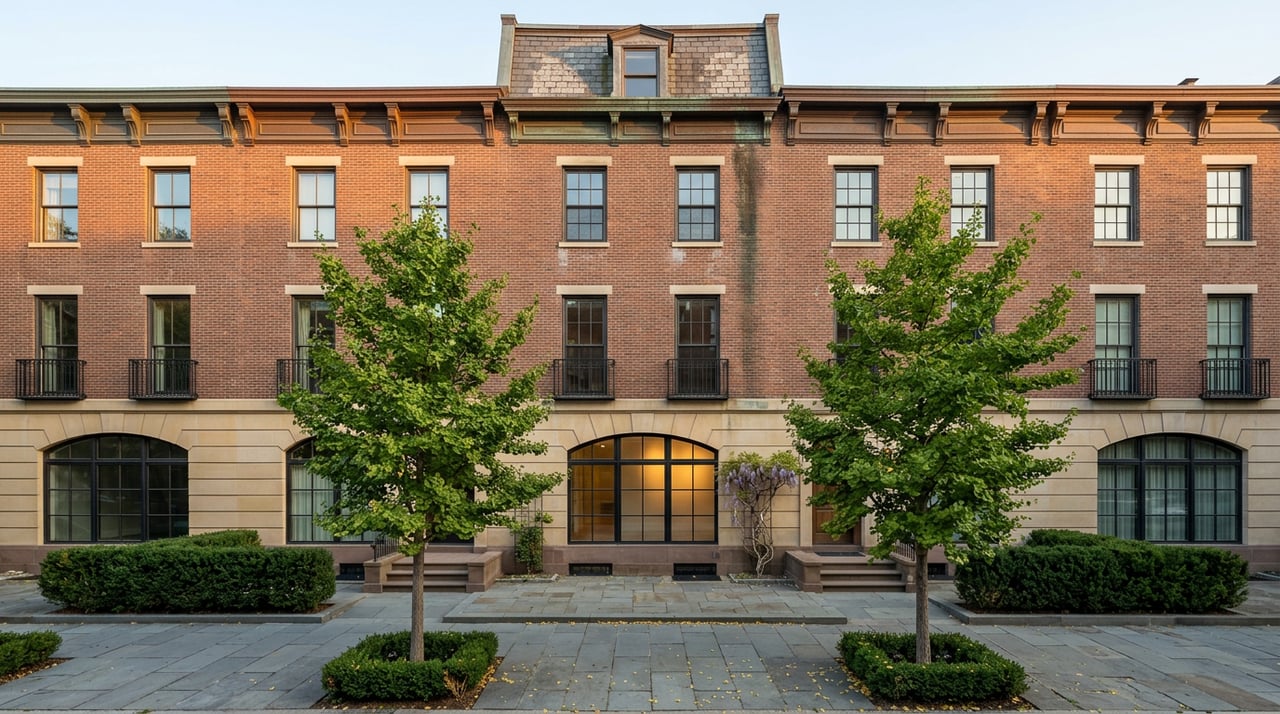
Two two-bedroom units, same floor plan, same view of the Hudson, sit in towers a block apart in Paulus Hook. One lists a monthly tax figure that looks almost too good to be true. The other, built the same year by the same type of sponsor, shows a number nearly double. Nothing about the units is different. What's different is the calendar attached to each building's tax agreement, and in 2026 that calendar started to matter more than it ever has.
If you're comparing condos across Downtown Jersey City this fall, the monthly tax line on a listing sheet is one of the least reliable numbers on the page, and not because anyone is lying. It's because that number is frequently a Payment in Lieu of Taxes, or a shorter five-year exemption, and both are temporary by design. The question that actually prices the unit isn't "what does it cost today." It's "what will it cost when the agreement ends, and how many years do I have before that happens." Two separate developments this year, a city-wide compliance audit and a municipal tax fight that ran from spring through midsummer, widened that gap in ways the listing portals haven't caught up to yet.
Two different instruments, one confusing tax line
New Jersey gives municipalities a few overlapping tools to encourage development on underused or contaminated parcels, and Jersey City has leaned on all of them since its waterfront began converting from rail yards and warehouses into the towers that define the skyline today. For a condo buyer, only two of these tools matter day to day, and listings rarely distinguish between them clearly.
| Instrument | Typical term | Where you'll see it | What happens when it ends |
|---|---|---|---|
| Five-year tax exemption | Up to five years, under NJSA 40A:21-5 | Smaller condo conversions, individual unit renovations | Reverts to the standard rate; the step-up arrives fast because the term is short |
| Long-term PILOT | Ten to thirty years, under the Long-Term Tax Exemption Law, NJSA 40A:20-1 | Larger new-construction towers, including much of Downtown and Paulus Hook | Reverts to the standard rate, and the school portion of the bill, which the PILOT structure shields entirely, arrives in full for the first time |
| Standard taxation | No expiration | Older buildings and homes with no active agreement | Nothing changes; the rate is Jersey City's citywide 1.67% |
That last column is the one worth sitting with. Under a long-term PILOT, state law sends 95 percent of the payment to the municipality and 5 percent to the county, and the Board of Education receives nothing directly. Under conventional taxation, the city keeps roughly 35 to 40 percent while the county levy and the school district split the rest, with schools typically taking the largest share. A unit on a PILOT isn't paying a discounted version of the same bill. It's paying a different bill entirely, one that omits an entire category of taxation until the day the agreement lapses. That's the mechanism behind a pattern several local mortgage and real estate analysts have flagged this year: payment jumps of roughly $800 a month are common when an abatement expires, and most buyers never modeled it going in.
Jersey City's own standard rate, for what it's worth, is not the villain here. At 1.67 percent it runs well below Newark's 2.8 percent, Montclair's 3.2 percent, and Maplewood's 3.4 percent. The distortion isn't that Jersey City taxes are high. It's that an abated unit's current payment tells you almost nothing about where that payment is headed, and the distance between those two numbers is exactly what a buyer is pricing when they make an offer.
The two moves that widened the gap in 2026
Two things happened this year that changed the math on every abated unit in the city, and neither has fully worked its way into listing copy.
On January 21, 2026, Mayor James Solomon signed an executive order launching a compliance audit of every active long-term tax exemption in Jersey City, a number that runs over 100 agreements. The stated purpose was straightforward: the city had not allocated meaningful resources to monitoring these deals, and had no real assurance the terms were being followed or that it was collecting everything owed. For a buyer, the practical effect is that some share of the city's PILOT inventory now carries a form of counterparty risk that didn't exist a year ago. An agreement flagged in that audit could be amended, enforced, or in some cases terminated during the years a buyer intended to hold the unit, and that risk belongs in the offer, not discovered later.
The second move landed on the budget itself. Jersey City entered 2026 facing a deficit reported at roughly $255 million. In June, the Solomon administration floated a 20 percent municipal property tax increase, later revised down to 15 percent after the city secured about $120 million in state aid, a mix of loan and grant funding, plus roughly $10 million in service cuts. The city council rejected that 15 percent hike outright on July 2, though the underlying deficit didn't go anywhere. On July 15, the council introduced a new budget raising the municipal rate by about 15.5 percent, which was on track for adoption within weeks, with county and school levies also rising roughly 14 percent in the same cycle.
Here's the part that matters for anyone weighing an abated unit against a fully taxed one: that hike does not touch what a PILOT owner pays today. A PILOT payment is fixed by its financial agreement, not the municipal rate. But it does raise the number that unit reverts to the moment the agreement ends, and it raises the comparable conventional figure any appraiser or buyer's attorney will run against the abated listing. Every year added to the standard rate between now and a given building's expiration date makes the eventual cliff steeper.
Worth noting too: Jersey City has signed only eight new PILOT agreements since 2017, all tied to affordable housing or specific community givebacks like Embankment Park, which means the supply of these deals isn't being replenished at anywhere near the pace it once was. Roughly 32 long-term agreements are set to expire over the next four years of the current administration, which is a meaningful share of the city's abated housing stock working through that transition at once.
Where this catches buyers off guard
The instinct on a listing sheet is to lead with the low PILOT payment because it makes the monthly carry look attractive. In 2026, that instinct works against a buyer more often than it used to.
A few specifics worth knowing before you make an offer on an abated unit:
- Lenders don't all treat these payments the same way. Some underwrite the current abated figure. Others underwrite the projected post-abatement number, which changes your debt-to-income calculation and can move your pre-approval amount before you've even seen the listing sheet.
- Attorneys are increasingly pulling the recorded financial agreement from the state's PILOT database during attorney review, not just taking the listing's tax figure at face value. Any gap between the marketing number and the recorded terms becomes a point of renegotiation.
- On long-term PILOTs, the compliance obligation typically sits with the sponsor entity rather than the individual unit owner, but in some building structures that exposure can filter down through common charges if the agreement runs into trouble.
- A shorter remaining term isn't automatically a worse buy. A unit with two years left on a five-year exemption can be priced correctly if the seller has already built the rollover into the ask. The mistake isn't buying an abated unit. It's paying an unabated price for the abated years and inheriting the cliff yourself.
A few questions worth asking before you write an offer
Does the 15.5 percent municipal hike change what I owe today if my unit is on a PILOT? No. A PILOT payment is fixed by the financial agreement, not the municipal rate. The hike changes what the unit will owe after the agreement ends and raises the conventional comparison figure your appraiser will use.
Should I avoid abated buildings entirely? Not necessarily. An abated unit with a properly modeled expiration date, disclosed early and reflected in the price, can be a reasonable trade for the years you hold it. The risk is in buildings where that modeling hasn't happened.
Where do I actually check whether a building's abatement is in good standing? Start with the recorded financial agreement, available through the state's public PILOT records, and ask directly whether the property appears on the list flagged under the January 2026 executive order. The NJ Division of Taxation also maintains general guidance on how these programs are structured at the state level, and local budget reporting from Better Blocks NJ has tracked how many agreements are due to expire under the current administration.
What this means if you're comparing Downtown against the rest of Hudson County
None of this argues against buying in Downtown or Paulus Hook. It argues for pricing what you're actually buying, which is a payment schedule with an end date, not a permanent number. That distinction is exactly where a senior agent who knows both the building history and the underlying agreement earns their keep, especially when two units that look identical on paper can carry very different real costs five or ten years out.
If you're weighing a purchase in Downtown Jersey City against an older property elsewhere in Hudson County, or trying to figure out what a specific building's abatement status actually means for your offer, Gregory Cohen can walk through the financial agreement with you and price the deal on what it will cost after the countdown runs out, not just what it costs today. Request a personalized market valuation and consultation to get started.