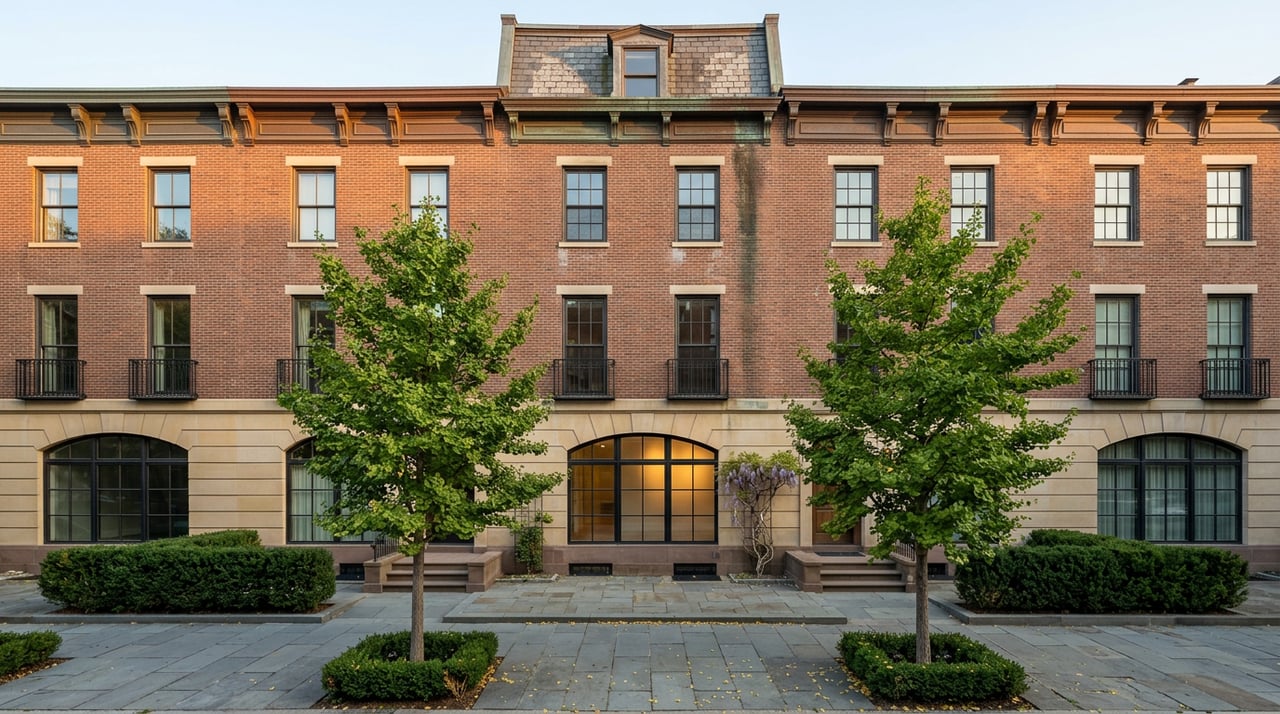
Half a mile apart, two listings on the market this year told two opposite stories. One was an income-capped HDFC co-op on East 5th Street, the kind of prewar walk-up unit that trades for the price of a nice car down payment elsewhere in the country. The other was the last remaining penthouse at 220 East 9th Street, a converted parking garage turned 18-unit boutique condominium, asking $9.75 million as of early 2026. Both are East Village real estate. Neither one is what the neighborhood's median price is actually measuring.
That gap is the reason a headline number circulating this year, that East Village home prices fell sharply, sits next to another number showing condo prices at a record high, in the same data set, for the same neighborhood, in the same month. Both are true. Neither is the whole story. If you're comparing the East Village to another downtown pocket right now, the median is the least useful number on the page.
What the headline number is actually counting
In June 2026, the East Village's overall median home sale price came in down 35.1% year over year, based on just 16 closed transactions that month. In that same data set, for that same month, the median condo price rose 44.4% year over year, and the median co-op price rose 17.1%. A separate three-month window ending in May 2026 told a related but not identical story: the blended median fell 19.3% year over year, even as the number of homes sold actually rose, 27 in May 2026 versus 19 a year earlier, and the average listing sat on the market for 185 days compared to 60 days the year before.
Read those side by side and the contradiction resolves. The overall median isn't measuring appreciation or decline. It's measuring which fraction of a very small monthly sample happened to close: mostly modest co-op resales in one stretch, a cluster of high-end condo closings in another. Sixteen or twenty-seven transactions is not enough volume for a median to tell you anything about the trend. It's enough for one $9 million closing, or its absence, to swing the whole number.
Where the condo number is coming from
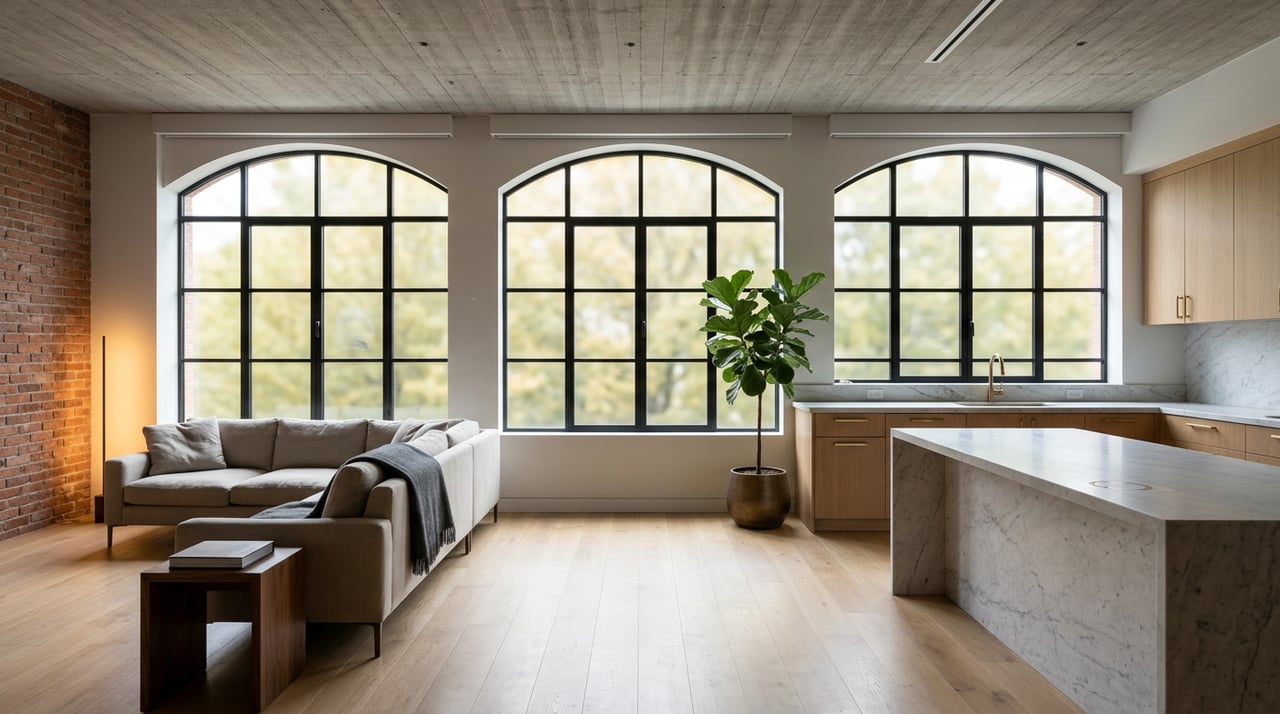
The condo side of that swing has a name, and an address. 220 East 9th Street replaced a shuttered 175-space parking garage between Stuyvesant Street and Second Avenue, near Astor Place and St. Mark's Church in-the-Bowery. Developer Arcus bought the site for $14 million in 2024 and built 18 one- to four-bedroom residences behind a hand-laid red brick facade, with board-formed concrete ceilings, oversized factory-style windows, and private on-site parking, a genuine rarity for downtown Manhattan. The building never ran a conventional public marketing campaign. Units moved through private introductions rather than open listings, an approach more often associated with ultra-discreet townhouse sales than a boutique East Village conversion, and by early 2026 it was down to a single remaining home, Penthouse B, a four-bedroom asking $9.75 million.
A few blocks over, 45 East 7th Street took a similar approach with a different scale back in 2025, launching a 21-unit building designed by Morris Adjmi with one-bedrooms starting around $1.35 million and a penthouse asking $8.3 million. Neither building needed hundreds of buyers. Each needed a handful of the right ones, and a single closing at that price point does more to move a thin monthly median than a dozen ordinary resales combined.
That's the mechanism behind the condo number climbing 44% in a single month. It isn't a broad repricing of every condo in the neighborhood. It's a small number of boutique, design-forward buildings finding buyers willing to pay for scarcity, parking, and loft-scale proportions that this stretch of downtown rarely offers.
What's holding the co-op number up
The co-op side of the ledger is doing something different. The East Village carries one of Manhattan's heavier concentrations of HDFC cooperatives, buildings the city transferred to resident-owned corporations decades ago in exchange for permanent income caps on who can buy in. A two-bedroom HDFC co-op on East 5th Street listed this year at $548,000, one of a steady supply of income-capped units across the neighborhood that price in the same band. These aren't discounted because they're undesirable. They're restricted: a family of four earning more than roughly $150,000 a year typically won't qualify to buy one, even though that same income would strain to rent a comparable unfacilitated two-bedroom nearby. Buyers who do qualify still need at least 20% down, often more, since HDFC lenders are a narrower pool than conventional co-op financing. And when an HDFC owner eventually sells, the building's flip tax runs 20% to 30% of the sale price or profit, far above the 1% to 3% flip tax typical at a market-rate co-op, a mechanism built specifically to keep the next sale affordable too.
None of that shows up as a price swing. It shows up as a floor. HDFC and standard walk-up co-op resales in the East Village keep closing in a narrower, steadier band regardless of what the luxury condo market is doing three blocks away, which is exactly why the co-op median moved up modestly this year while the blended number fell. Fewer distressed or deeply discounted co-op resales closed, and the ones that did skewed toward slightly stronger prices, a small shift in a small sample.
What this actually means if you're comparing East Village listings
The mistake is treating "East Village" as one price. It's closer to three separate markets stacked on the same map.
| Product type | What you're buying into | Typical friction |
|---|---|---|
| Walk-up co-op (market rate) | Prewar building, board-run, often no elevator | Board package, interview, 20%+ down, sublet limits |
| HDFC co-op | Income-capped resident-owned building | Income cap around 120% AMI, 20%+ down, 20-30% flip tax |
| New-development condo | Deeded ownership, amenities, often full-service | Fewer restrictions, priced for scarcity and design |
A co-op's board approval process is the part buyers underestimate. Most Manhattan co-op boards want a full financial package, tax returns, bank statements, employment verification, and a formal interview, and the process typically runs 30 to 60 days from application to a decision they're not required to explain if the answer is no. Subletting is even more restricted: many buildings require one to two years of ownership before a shareholder can rent the unit at all, then cap the sublet at one to two years within a five-year window, plus a monthly surcharge often running 25% to 35% of maintenance. A condo carries almost none of that. That difference in flexibility, not location, is a real part of why a condo in a converted parking garage on East 9th Street can command $9.75 million while a co-op four blocks away asks a tenth of that.
If you're pricing a sale or sizing up a purchase here, the useful question isn't "what's the East Village median right now." It's "what am I actually comparing this listing to," a walk-up co-op, an HDFC co-op, or a new-development condo, because each one is answering to a different set of buyers, a different financing pool, and a different set of rules about what happens after closing.
Frequently Asked Questions
Does a lower co-op price mean it's a worse deal? Not necessarily. Co-op maintenance fees typically fold in the building's property taxes, so the monthly cost gap between a co-op and a comparably priced condo is often smaller than the purchase price difference suggests. The lower price reflects board-approval friction, sublet restrictions, and stricter financing rules, not lower quality.
Should I only look at condos if I want price growth? Not automatically. The condo numbers moving this year are concentrated in a handful of new, design-led buildings selling to a narrow luxury buyer pool. A condo bought at the wrong basis in a building without that scarcity story doesn't inherit that trajectory just by being a condo.
Why did the average listing sit on the market so much longer this year? The jump from roughly 60 days to 185 days over the year tracks with thinner overall volume rather than a change in how desirable the neighborhood is. When only a couple dozen homes close in a month, the ones that take longer to find a buyer weigh more heavily on the average.
If you're weighing a purchase or a sale anywhere between Tompkins Square Park and Astor Place, the building type matters more than the block. Gregory Cohen works these distinctions daily across Manhattan, Hudson County, and Litchfield County, and can walk you through what a specific building's board rules, flip tax, or financing structure actually mean for your numbers. Request a personalized market valuation and consultation to see where your target listing really sits.